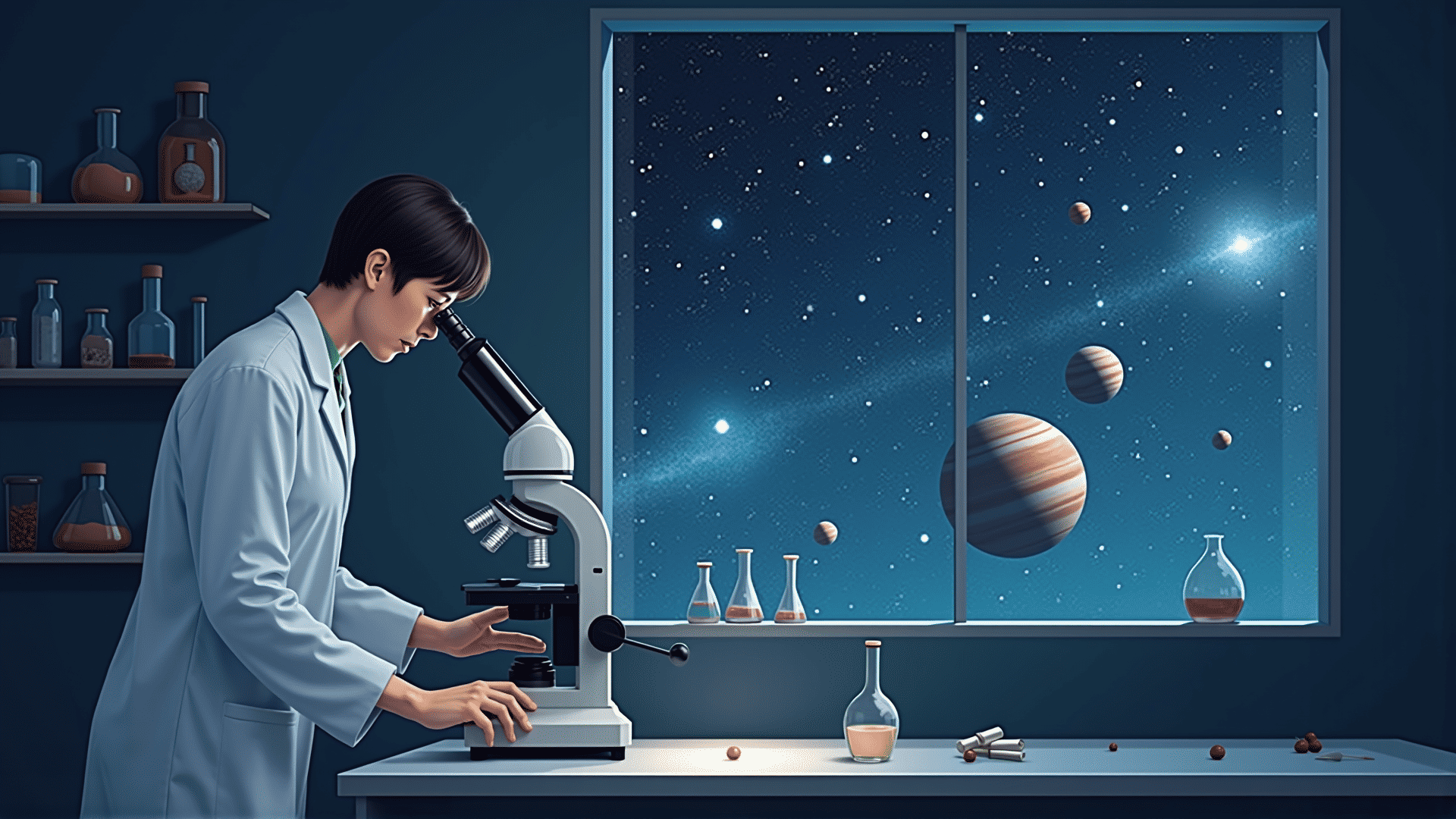
The quest to uncover extraterrestrial life has captivated humanity for generations, driven by our intrinsic desire to understand our place in the cosmos. Recent breakthroughs in the field of astrobiology are significantly shaping our understanding of life beyond Earth, offering tantalizing clues and sparking new questions about the universe.
One of the cornerstone areas of this pursuit involves the exploration of our neighboring planetary bodies, particularly Mars. The Red Planet has long been a focal point of astrobiological interest due to its similarities to early Earth. With NASA's Perseverance Rover and ESA's ExoMars mission, scientists are delving into the Martian surface, searching for signs of past life and examining the planet's geology and climate. Recent discoveries of organic molecules and fluctuating methane levels in Mars' atmosphere are particularly intriguing, suggesting the potential for microbial life either presently or in the planet's ancient past.
Beyond Mars, icy moons such as Europa, Enceladus, and Titan are attracting significant attention. These celestial bodies, orbiting planets like Jupiter and Saturn, harbor subsurface oceans beneath their icy crusts. The potential for these environments to support life has been bolstered by the discovery of water plumes and evidence of hydrothermal activity, which could offer the chemical energy necessary for life. NASA's upcoming Europa Clipper mission aims to provide closer scrutiny by mapping Europa's surface and examining its chemical composition in greater detail.
Astrobiology extends its reach beyond our solar system through the analysis of exoplanets—planets orbiting stars outside our solar neighborhood. With advancements in telescopic technologies, such as the James Webb Space Telescope, astronomers are identifying a diverse array of exoplanets in the habitable zones of their stars. Notably, the recent detection of potential biosignatures, such as the presence of phosphine gas in the atmosphere of Venus and certain spectral signatures in distant exoplanet atmospheres, fuel the possibility that life may arise in a multitude of alien environments.
In addition to these observational missions, astrobiologists are wrestling with profound questions about the nature of life itself. Research into the origins of life on Earth serves as a foundation for understanding life's potential emergence elsewhere. Studies on extremophiles—organisms that thrive in the most inhospitable environments on our planet, from hydrothermal vents to acidic lakes—highlight the resilience of life and inform hypotheses about how life might endure in the harsh conditions of space.
Furthermore, the exploration of synthetic biology and the development of artificial life forms are expanding our potential to recognize life that is fundamentally different from our own. By synthesizing new genetic codes and constructing primitive cellular structures, scientists are laying the groundwork for a broader conceptual framework of life, prompting a reevaluation of the classic criteria used to identify living organisms.
The search for extraterrestrial life is not just about the discovery of life elsewhere but also about redefining our understanding of life on Earth and its adaptability. Each new finding, whether a promising biosignature or the detection of complex organic chemistry, contributes to a more nuanced view of the cosmos and our place within it. This scientific endeavor, marked by continual advancement and speculative promise, underscores a profound truth: in the vastness of the universe, the quest to find life is as much about discovery as it is about illuminating the possibilities of existence itself.